
In the fast-evolving landscape of automated retail, vending coffee machines have transcended their once-“novelty” status to become a cornerstone of modern convenience. As global consumers demand faster, more personalized, and consistently high-quality coffee experiences, traditional manual vending machines—reliant on simplistic brewing mechanisms and limited user interaction—are struggling to keep pace. For exporters and manufacturers, this shift demands a reimagining of product design. Today, we unpack the three core technologies that are redefining vending coffee machines, turning them from “coffee dispensers” into “intelligent beverage partners.”
1. Intelligent Interaction Systems: Bridging Humans and Machines
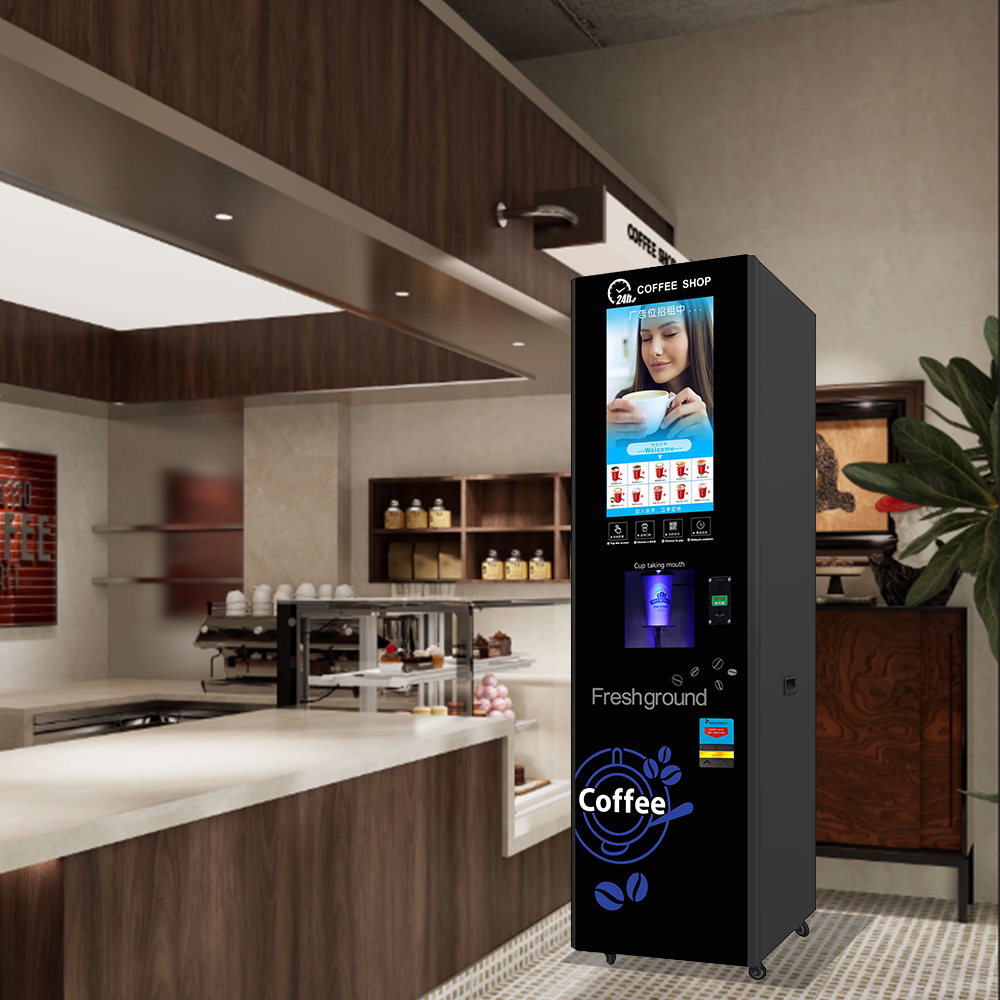
Gone are the days when a vending machine’s “interaction” was limited to a coin slot and a button. Modern intelligent vending coffee machines leverage multi-modal interaction technologies—combining touchscreens, voice commands, and even AI-powered facial recognition—to create seamless user experiences.
For example, a machine equipped with natural language processing (NLP) can understand casual requests like, “Make me a latte with oat milk, extra hot,” and adjust brewing parameters in real time. Touchscreens go beyond order selection; they display dynamic content—such as coffee origin stories, calorie counts, or seasonal promotions—to engage users. Crucially, these systems also integrate with mobile apps, allowing users to pre-order via smartphones, skip queues, and earn loyalty points.
Why it matters for exporters: In markets like Europe and Southeast Asia, where coffee culture thrives on personalization, interactive machines boost average transaction values by 20-30% (source: 2024 Vending Industry Report). They also reduce user errors—no more mispressing buttons—and cater to non-tech-savvy customers through intuitive interfaces.
2. Dynamic Brewing Control: Precision at Scale
Traditional manual vending machines often produce inconsistent coffee due to fixed brewing parameters (e.g., water temperature, pressure, and extraction time). Intelligent machines solve this with IoT-enabled dynamic brewing control systems, which use sensors and AI algorithms to adapt to variables in real time.
Here’s how it works: Sensors monitor water quality (hardness, temperature), bean freshness, and environmental conditions (humidity, ambient temperature). The AI engine then adjusts brewing parameters—such as grinding coarseness, brew time, and milk frothing intensity—to match the user’s selected drink profile. For instance, if the machine detects humidity is high (which affects grind size), it automatically fine-tunes the grinder to ensure optimal extraction.
Why it matters for exporters: Consistency is king in coffee retail. Machines with dynamic control maintain flavor profiles within 5% variance (vs. 15-20% for manual machines), according to lab tests. This reliability builds consumer trust, leading to higher repeat purchases—a critical factor for operators in competitive urban hubs.
3. Remote O&M Platforms: Minimizing Downtime, Maximizing Profit
One of the biggest pain points for vending machine operators is maintenance. Traditional machines require on-site technicians for even minor fixes, leading to costly downtime. Intelligent vending coffee machines solve this with cloud-based remote operation and maintenance (O&M) platforms.
These platforms use IoT connectivity to monitor machine health in real time—tracking metrics like bean inventory levels, water tank status, and component wear. If an issue is detected (e.g., a clogged milk frother), the system sends alerts to operators via a mobile app, along with diagnostic data and step-by-step repair guides. In some cases, AI can even predict failures before they occur—for example, flagging a worn pump based on usage patterns—and automatically schedule part replacements.
Why it matters for exporters: For operators managing hundreds of machines across cities, remote O&M reduces service costs by up to 40% and cuts downtime by 60% (per 2024 industry benchmarks). For exporters, this translates to stronger value propositions: machines that are not just “sold” but “supported” globally, even in regions with limited local technical expertise.
FAQs: Your Questions, Answered
Q: Are intelligent vending coffee machines too expensive for small operators?
A: While upfront costs are 15-25% higher than manual machines, the ROI is compelling. Reduced labor (no need for daily restocking/check-ins), lower maintenance, and higher sales from personalized experiences typically offset the initial investment within 12-18 months. Many operators also lease machines via subscription models, further lowering entry barriers.
Q: Can these machines handle diverse coffee preferences (e.g., strong vs. mild, different milk types)?
A: Absolutely. Modern systems are designed with modular beverage libraries, allowing operators to pre-program dozens of recipes—from Italian espresso to Australian flat white, and even plant-based milk alternatives. Some advanced models even learn user preferences over time, suggesting “your usual” on repeat visits.
Q: How secure are these machines against tampering or cyberattacks?
A: Reputable manufacturers (like Sheen) use industrial-grade encryption for IoT communication and anti-tamper sensors (e.g., alarms for unauthorized panel access). Regular software updates patch vulnerabilities, ensuring compliance with global data security standards (e.g., GDPR in Europe).
Conclusion: The Future is Intelligent—And It’s Already Here
The transition from manual to intelligent vending coffee machines isn’t just a technological upgrade; it’s a shift in how we define “convenience.” For exporters, this means opportunities to deliver machines that meet modern demands—personalization, consistency, and reliability—while driving operator profitability.
At Sheen, we’re at the forefront of this revolution, designing and manufacturing intelligent vending solutions tailored to global markets. Whether you’re a retailer, distributor, or hospitality chain, our team can help you navigate the tech landscape and find the perfect machine for your needs.
Stay tuned to Sheen’s Blog for more insights into coffee tech trends, market analysis, and operational tips. Have questions about pricing, customization, or after-sales support? Don’t hesitate to reach out—we’re here to help you succeed.
Let’s brew the future, together.